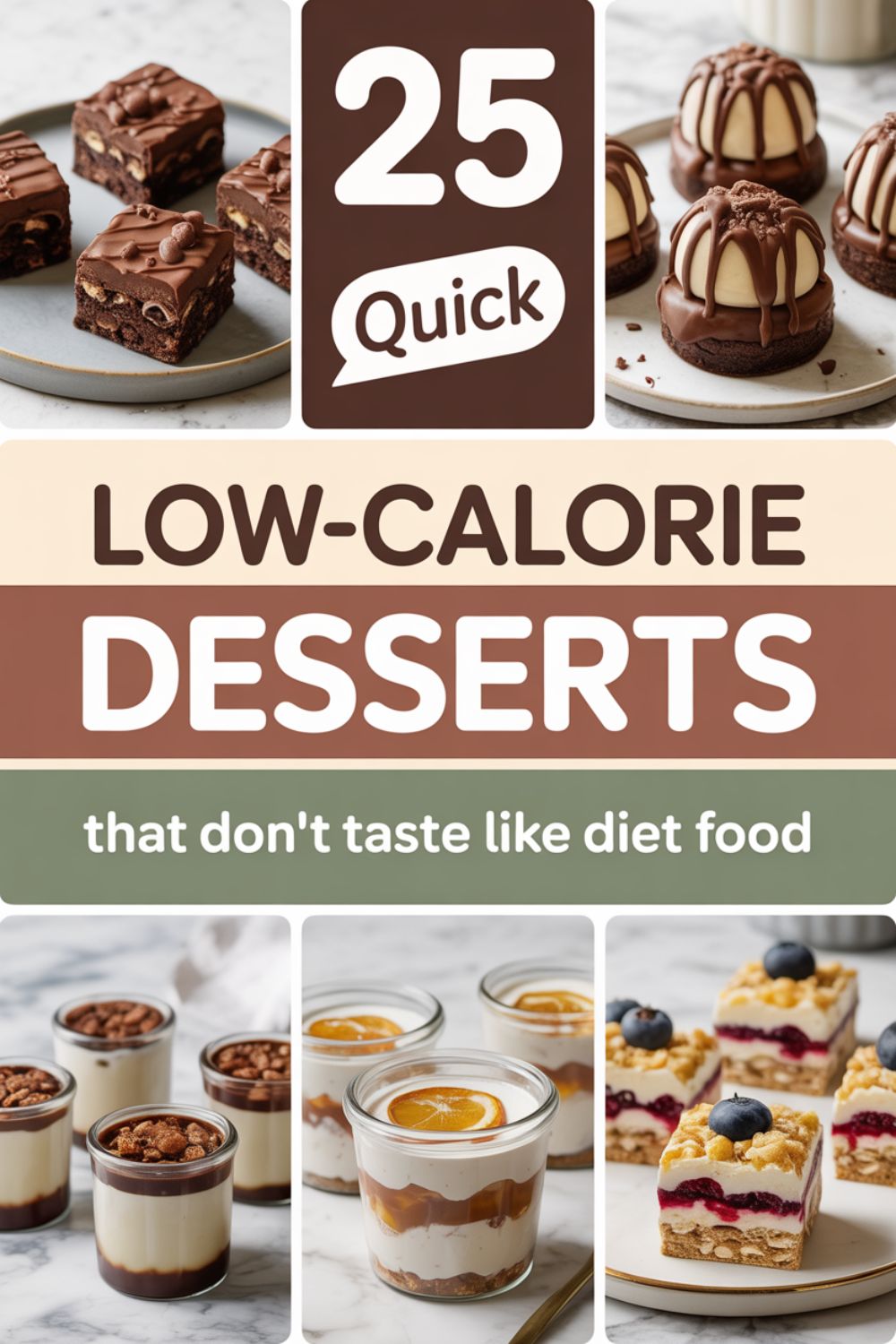
25 Quick Low-Calorie Desserts That Don’t Taste Like Diet Food

25 Quick Low-Calorie Desserts That Don’t Taste Like Diet Food
Let’s be real—most “healthy” desserts taste like sad cardboard with a sprinkle of false hope. You know the ones I’m talking about. The recipes that promise chocolate heaven but deliver chalky disappointment. The treats that make you wonder if you’d rather just skip dessert altogether.
But here’s the thing: low-calorie desserts don’t have to taste like punishment. I’ve spent way too many evenings experimenting in my kitchen, creating treats that actually satisfy my sweet tooth without making me feel like I’m choking down diet culture propaganda. And guess what? Some of them are so good, my friends don’t even realize they’re eating something that won’t completely derail their goals.
Whether you’re trying to lose weight, maintain a healthy lifestyle, or just want something sweet that won’t send you into a food coma, these 25 desserts deliver real flavor without the guilt trip. No mysterious protein powders that taste like chalk. No dates masquerading as chocolate (sorry, but we all know that’s a lie). Just honest-to-goodness delicious treats that happen to be lighter on calories.
These are the kitchen basics that make these recipes easy: creamy, rich and picture-perfect, the kind of treat your family asks for again and again.
- this double boiler setCheck today’s price →
- high-speed blenderCheck today’s price →
- these glass mason jarsCheck today’s price →
- Glass Meal Prep Containers with LidsCheck today’s price →
Amazon prices and deals change often, so it’s worth checking today’s price.
Why Low-Calorie Desserts Actually Work
Before we jump into the recipes, let’s talk about why this approach makes sense. The whole concept of “diet desserts” got a bad reputation because, frankly, most of them suck. But the problem isn’t the idea of lighter desserts—it’s the execution.
According to research on healthy eating patterns, incorporating satisfying treats into your diet actually helps with long-term success. When you completely deprive yourself, you’re more likely to binge later. It’s not willpower—it’s biology.
The secret? Focus on ingredients that naturally taste good. Dark chocolate isn’t a compromise—it’s genuinely delicious and happens to be packed with antioxidants. Greek yogurt is creamy and tangy, plus it brings protein to the party. Fresh fruit? That’s nature’s candy, and it doesn’t need much help to shine.
The Dark Chocolate Advantage
Let’s start with everyone’s favorite: chocolate. But not just any chocolate—we’re talking about the good stuff. Dark chocolate with at least 70% cacao is your best friend here.
Why? Because dark chocolate contains flavonoids that can help improve blood flow and even lower blood pressure. It’s one of those rare situations where something that tastes indulgent actually has legitimate health benefits. The higher the cacao percentage, the more antioxidants you’re getting and the less sugar is hiding in there.
1. Dark Chocolate Covered Strawberries
This one’s almost too easy. Melt some quality dark chocolate, dip fresh strawberries, let them set. Done. Each strawberry clocks in around 30-40 calories depending on size, and you get that perfect balance of rich chocolate and fresh fruit.
I use this double boiler set for melting chocolate because direct heat tends to make chocolate seize up and get grainy. Nobody wants grainy chocolate—that’s just sad.
2. Three-Ingredient Chocolate Avocado Mousse
Yeah, I know—avocado in dessert sounds weird. But trust me on this one. Blend ripe avocado with cocoa powder and a touch of honey or maple syrup until it’s silky smooth. The avocado gives you that creamy, rich texture without cream or butter, and you can’t actually taste it. The healthy fats from the avocado also help you feel satisfied, so you’re not prowling the kitchen an hour later.
Get a decent high-speed blender for this—those cheap ones just push avocado chunks around instead of actually blending.
3. Frozen Chocolate-Dipped Banana Bites
Slice bananas into rounds, dip them halfway in melted dark chocolate, roll in crushed nuts if you’re feeling fancy, and freeze. These little guys are perfect when you want something sweet but don’t want to commit to a whole dessert. Around 50-60 calories per bite.
Looking for more quick treat ideas? These frozen banana bites pair perfectly with the concepts in our easy dessert bars guide, especially if you’re meal prepping snacks for the week. And if you’re into minimal-fuss desserts, you’ll want to check out these 5-ingredient dessert recipes.
The Greek Yogurt Game-Changer
If you’re not already obsessed with Greek yogurt, you’re about to be. This stuff is basically a dessert miracle worker. It’s creamy, it’s tangy, it’s packed with protein, and it plays well with almost any flavor combination you can throw at it.
The protein content is key here. We’re talking about 15-20 grams of protein per cup, which helps keep you full and satisfied. Compare that to regular ice cream, which gives you mostly sugar and regret.
4. Greek Yogurt Parfait with Berries
Layer Greek yogurt with fresh berries and a small handful of granola. It’s simple, but that’s why it works. The berries add natural sweetness and fiber, the yogurt brings protein and creaminess, and the granola gives you that satisfying crunch. Around 150-200 calories depending on portions.
For parfaits, I keep these glass mason jars on hand—they’re perfect for portion control and they look way prettier than eating straight from the yogurt container (not that I’ve ever done that, obviously).
5. Frozen Yogurt Bark
Spread Greek yogurt on a silicone baking mat, swirl in some jam or nut butter, top with berries and maybe some dark chocolate chips, then freeze. Break it into pieces and you’ve got a healthier version of those fancy frozen yogurt bark recipes all over Instagram. Each piece is roughly 60-80 calories.
6. Cottage Cheese Bark (Hear Me Out)
Before you make that face—cottage cheese is having a moment, and for good reason. Blend it until smooth, spread it out, add toppings, freeze. It’s basically the same concept as yogurt bark but with even more protein. The texture when frozen is surprisingly similar to ice cream. I was skeptical too, but it actually works.
Meal Prep Essentials Used in This Plan
- Glass Meal Prep Containers with Lids – Perfect for storing portioned desserts and keeping them fresh all week
- Digital Kitchen Scale – Takes the guesswork out of portions when you’re trying to keep calories in check
- Silicone Muffin Pan – Makes individual dessert portions without any sticking or fuss
- Dessert Recipe Collection E-book – Comprehensive guide with nutritional breakdowns for all recipes
- Weekly Meal Planner Template – Digital planner that includes dessert planning sections
- Healthy Swaps Cheat Sheet PDF – Quick reference for ingredient substitutions that actually work
Fruit-Forward Desserts That Don’t Feel Boring
Fruit gets a bad rap in the dessert world. “Just eat an apple” feels like the consolation prize when what you really want is something more exciting. But fruit-based desserts can be genuinely crave-worthy when you treat the fruit with some respect.
7. Cinnamon Baked Apples
Core an apple, stuff it with a mixture of cinnamon, a tiny bit of brown sugar, and some chopped walnuts, then bake until tender. It smells amazing, tastes like apple pie without the crust guilt, and comes in around 120-150 calories. Serve it warm with a dollop of Greek yogurt and honestly, you won’t miss the traditional apple pie.
8. Grilled Peaches with Honey
Cut peaches in half, brush with a tiny bit of coconut oil, grill them until they get those beautiful char marks, then drizzle with honey. The grilling intensifies the sweetness and adds that smoky depth. Top with a little mascarpone or Greek yogurt if you want extra richness. About 80-100 calories per half.
9. Berry Sorbet (The Real Deal)
Freeze fresh berries, then blend them with just a splash of lemon juice and maybe a touch of honey if they’re not sweet enough. That’s it. No ice cream maker needed. The texture is surprisingly smooth if you use a good blender, and you get intense fruit flavor without any weird additives. Roughly 60-80 calories per serving.
Speaking of frozen treats, you’ll definitely want to explore more frozen dessert options that can be prepped ahead. And if you’re working with kids, these kid-friendly dessert ideas are equally delicious for adults.
10. Watermelon Pizza
Slice watermelon into rounds about an inch thick, then top like pizza—Greek yogurt as the “sauce,” fresh berries, shredded coconut, mint leaves, whatever you want. It’s fun, it’s refreshing, and it’s ridiculously low in calories. Plus, it photographs well if you’re into that sort of thing.
No-Bake Wonders That Save Time and Calories
Sometimes you want dessert but the thought of turning on the oven sounds exhausting. No-bake desserts are clutch for those moments, and many of them naturally end up being lower in calories because you’re not dealing with butter-heavy doughs and crusts.
11. Chocolate Chia Pudding
Mix chia seeds with almond milk, cocoa powder, and a sweetener of your choice. Let it sit in the fridge overnight. The chia seeds plump up and create this pudding-like texture that’s honestly addictive. Each serving has about 150 calories and a surprising amount of fiber and omega-3s.
I store these in small glass jars with lids because they stack nicely in the fridge and look way more appetizing than a random bowl covered in plastic wrap.
12. Peanut Butter Protein Balls
Mix natural peanut butter, oats, a touch of honey, and maybe some mini chocolate chips. Roll into balls, refrigerate. They’re essentially no-bake cookies but somehow feel more virtuous. Around 80-100 calories per ball, and they’re great for when you need something sweet but also want sustained energy.
The key is using natural peanut butter—the kind where oil separates on top. Yeah, it’s annoying to stir, but that processed stuff with added sugars defeats the purpose. Speaking of nut butters, almond butter works great too and has a slightly different flavor profile that some people prefer.
13. Mango Coconut Popsicles
Blend mango, coconut milk, and a squeeze of lime. Pour into popsicle molds and freeze. These taste like tropical vacation in popsicle form, and they’re only about 50-70 calories each. Way better than store-bought popsicles that are basically frozen sugar water with artificial colors.
Invest in decent popsicle molds with covers—the cheap ones leak everywhere and the sticks fall out. Ask me how I know.
14. Strawberry Shortcake Bites
Use angel food cake (which is naturally low-fat), cut into cubes, and layer with macerated strawberries and light whipped cream or Greek yogurt. The angel food cake soaks up the strawberry juice and becomes this amazing sweet, tender thing. About 100-120 calories per serving.
If you’re loving these quick assembly ideas, check out our collection of 30-minute dessert recipes. They’re perfect for busy weeknights when you want something sweet but don’t have hours to spend in the kitchen. You might also appreciate these no-oven dessert options for the same reason.
Portion-Controlled Indulgences
Sometimes the best low-calorie dessert strategy is just making regular desserts in smaller, more reasonable portions. Revolutionary, I know. But seriously, when you commit to actually savoring a small portion instead of mindlessly eating a giant serving, the experience is way better.
15. Mini Flourless Chocolate Cakes
These are rich, fudgy, and intensely chocolate. But because you’re making them in mini ramekins, each serving is automatically portion-controlled at around 150-180 calories. The flour-free aspect isn’t about being trendy—it actually makes them denser and more satisfying, so you feel content with less.
16. Single-Serve Chocolate Mug Cake
Mix flour, cocoa powder, sugar, and milk right in a mug, microwave for a minute, and boom—instant chocolate cake for one. It’s about 150-200 calories depending on your recipe, and you’re not left with an entire cake pan tempting you from the counter. See next: 25 Low-Calorie Berry Desserts for Spring →
For more individual serving ideas, explore our collection of mug cake recipes—they’re genius for portion control.
17. Mini Cheesecake Cups
Make cheesecake in a muffin tin lined with cupcake papers. Use a graham cracker crust on the bottom, fill with a mixture of cream cheese, Greek yogurt, and sweetener, then bake. Each mini cheesecake is perfectly portioned at around 120-150 calories, and you can top them with fresh berries.
Tools & Resources That Make Cooking Easier
- Kitchen Thermometer – Because nobody likes overcooked desserts
- Microplane Zester – Fresh citrus zest transforms simple desserts into something special
- Mini Food Processor – Perfect for small batches and grinding nuts for toppings
- Dessert Macros Calculator – Digital tool for tracking nutrition without obsessing
- Recipe Scaling Spreadsheet – Automatically adjusts recipes for different serving sizes
- WhatsApp Healthy Desserts Community – Join fellow dessert lovers sharing tips and modifications
Creative Swaps That Actually Work
The internet is full of ingredient swap advice that sounds good in theory but tastes terrible in practice. Here are the swaps I actually use and can vouch for.
18. Banana Ice Cream (Nice Cream)
Freeze bananas, then blend them until smooth. It turns into this creamy, ice cream-like texture that’s genuinely impressive. Add cocoa powder for chocolate, peanut butter for extra richness, or berries for fruit flavors. Around 100-120 calories per serving with zero added sugar.
The secret is making sure those bananas are really frozen solid and using a powerful blender. Anything less and you’ll end up with chunky banana mush.
19. Zucchini Brownies
I was skeptical about this one too. But grated zucchini adds moisture to brownies without adding much flavor, letting you cut back on oil or butter. They’re fudgier than regular brownies and clock in around 100-130 calories per square. Plus, you can tell yourself you’re eating vegetables for dessert, which is always entertaining.
20. Aquafaba Chocolate Mousse
Aquafaba is the liquid from a can of chickpeas, and when you whip it, it behaves remarkably like egg whites. Fold it into melted dark chocolate and you get a light, airy mousse that’s vegan and around 80-100 calories per serving. It’s weird science that works.
21. Cauliflower Chocolate Truffles
Okay, hear me out again. Steam cauliflower until soft, blend it with melted dark chocolate and cocoa powder, roll into balls, and dust with more cocoa powder. You cannot taste the cauliflower. I promise. These are rich, chocolatey, and about 40-50 calories per truffle.
Want more creative ingredient ideas? Our guide to desserts using pantry staples shows you how to work with what you already have. And for future planning, these freezer-friendly dessert options are game-changers.
Traditional Favorites, Lightened Up
Sometimes you don’t want something weird and experimental. You just want the classics but without blowing your entire day’s worth of calories on dessert.
22. Lighter Tiramisu
Use ladyfinger cookies (naturally lower in fat), mascarpone mixed with Greek yogurt instead of all mascarpone, and strong espresso. Layer everything up like traditional tiramisu. It’s still rich and coffee-soaked and wonderful, but comes in around 180-200 calories per serving instead of 400+.
23. Skinny Lemon Bars
Make a simple almond flour crust, fill with a lemon curd made with less butter and some Greek yogurt, bake. The tang from the lemon and yogurt is refreshing, and you’re looking at about 120-140 calories per bar. These are tart, sweet, and genuinely satisfying.
24. Lighter Chocolate Chip Cookies
Use a combination of whole wheat flour and all-purpose flour, replace half the butter with unsweetened applesauce, and reduce the sugar slightly. You still get cookies that taste like actual cookies—chewy, with good chocolate chips throughout—but at about 80-100 calories each instead of 150+. See next: 21 Low-Calorie Spring Desserts Under 200 Calories →
For cookie lovers, definitely explore our 3-ingredient dessert collection which includes some ridiculously simple cookie variations.
25. Angel Food Cake with Fresh Berries
Angel food cake is naturally low in fat and only about 70-80 calories per slice. Top it with fresh berries and a small dollop of whipped cream or yogurt. It’s light, it’s fluffy, and it doesn’t leave you feeling heavy afterward. Sometimes simple is exactly what you need.
The Mindset Shift That Makes This Work
Here’s what I’ve learned after years of trying to find that sweet spot between enjoying desserts and not feeling like garbage: it’s not actually about the calories. Yeah, I know that sounds contradictory given the entire article, but stick with me.
The calories matter in a practical sense—you probably don’t want to consume 800 calories of dessert every night. But the real game-changer is stopping the weird guilt cycle around sweets. When you give yourself permission to enjoy dessert without drama, you naturally make better choices because you’re not operating from a place of deprivation.
Research from Johns Hopkins Medicine shows that people who associate desserts with celebration rather than guilt have more success with long-term weight maintenance. It’s not about willpower—it’s about removing the emotional charge.
These 25 desserts aren’t about restriction. They’re about finding options that taste genuinely good while supporting whatever your health goals happen to be. Some nights you’ll want the chocolate chia pudding. Some nights you’ll want a regular chocolate chip cookie, and that’s fine too. The goal is having options that don’t make you feel like you’re choosing between enjoyment and health.
Making It Sustainable
The biggest mistake people make with “healthy desserts” is trying to be perfect all the time. That’s exhausting and it doesn’t work. Instead, aim for having these lighter options available most of the time, while leaving room for whatever dessert brings you joy.
I keep frozen bananas, Greek yogurt, dark chocolate, and fresh berries stocked basically always. That way, if I want something sweet, I can throw together one of these desserts in about five minutes. But I also don’t stress if I have birthday cake at a party or eat regular ice cream occasionally. The point is balance, not perfection.
Prep ahead when you can. Make a batch of protein balls or chocolate chia pudding at the start of the week. Having something ready to grab makes you way more likely to choose the healthier option instead of ordering delivery dessert at 9 PM because you’re tired and want something sweet.
Frequently Asked Questions
Can low-calorie desserts actually help with weight loss?
Yes, but not in the way you might think. The benefit isn’t just the calorie reduction—it’s that having satisfying dessert options prevents the deprivation-binge cycle that derails so many people. When you know you can have something sweet that tastes good, you’re less likely to overeat out of restriction-driven cravings. According to nutritionists, incorporating moderate treats into your diet actually supports long-term weight maintenance better than complete restriction.
What’s the healthiest sweetener to use in desserts?
There’s no single “healthiest” option, but natural sweeteners like honey, maple syrup, and dates all bring some nutritional value along with sweetness. Small amounts of regular sugar are fine too—the key is moderation. Stevia and monk fruit work if you need zero-calorie options, though some people find the taste off-putting. IMO, using small amounts of real sugar often tastes better than large amounts of artificial sweeteners.
How do I satisfy chocolate cravings without overdoing calories?
Focus on quality over quantity. A couple of squares of 70-85% dark chocolate (about 60-80 calories) can be more satisfying than a large serving of mediocre milk chocolate. The higher cacao content means more intense chocolate flavor and less sugar. Research shows dark chocolate contains flavonoids that may help reduce additional cravings, which is a nice bonus.
Can I meal prep these desserts for the week?
Absolutely, and I recommend it. Desserts like chia pudding, protein balls, frozen yogurt bark, and baked goods all store well for 4-7 days. Having portioned desserts ready to grab makes you way more likely to stick with healthier options instead of impulse-eating whatever’s around. Just store them properly in airtight containers and most will stay fresh all week.
Are fruit-based desserts really desserts, or is that just trying to trick myself?
Depends on how you prepare them. A plain apple? That’s a snack. But grilled peaches with honey and Greek yogurt, or berry sorbet with dark chocolate shavings? Those are legitimate desserts that happen to feature fruit prominently. The key is preparation and presentation—when you treat fruit thoughtfully, it becomes something special rather than feeling like you’re settling for “healthy” food.
Final Thoughts
Look, I’m not going to tell you that chocolate chia pudding tastes exactly like a hot fudge sundae, because it doesn’t. But it tastes damn good in its own right, and more importantly, it doesn’t leave you feeling bloated and regretful an hour later.
These 25 desserts aren’t about deprivation or forcing yourself to like things you don’t. They’re about expanding your definition of what dessert can be. Sometimes that’s a rich, dark chocolate mousse. Sometimes it’s fresh berries with cream. Sometimes it’s a single-serve mug cake when you want chocolate cake but don’t need an entire 9×13 pan hanging around.
The best dessert is the one you actually enjoy eating and that supports how you want to feel afterward. Whether that’s 80 calories or 200 calories doesn’t matter nearly as much as whether you felt satisfied and didn’t spend the rest of the evening thinking about what you “should” or “shouldn’t” have eaten.
Start with a couple of these recipes that sound genuinely appealing to you. Not the ones you think you “should” make, but the ones that make you think “yeah, I’d actually eat that.” Build from there. You might be surprised at how good lighter desserts can actually be when you stop trying to make them taste like something they’re not.