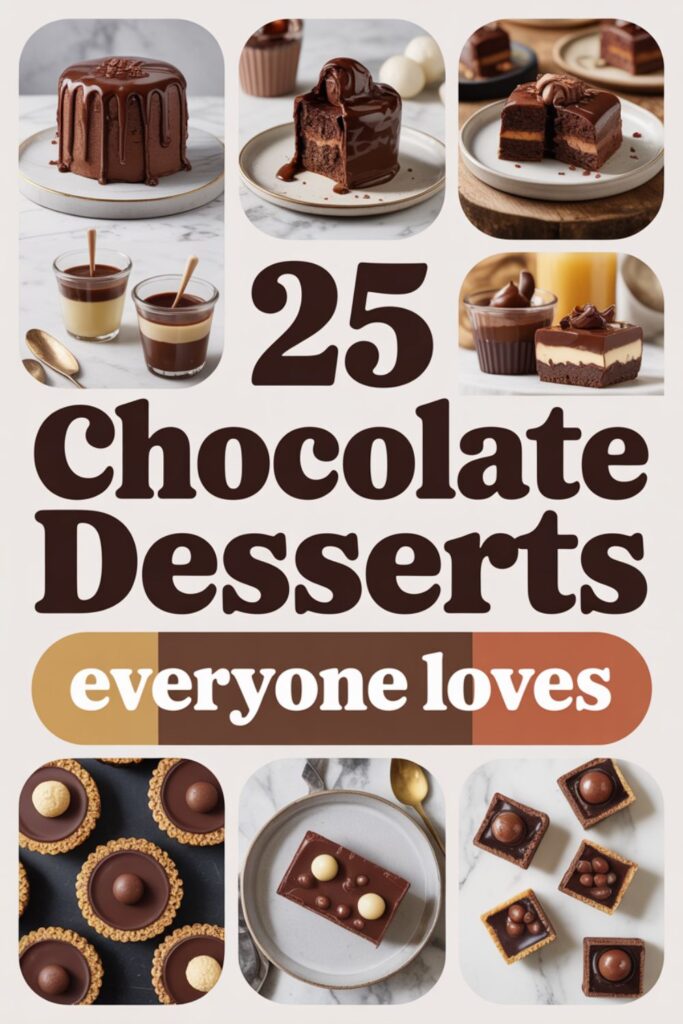
25 Classic Chocolate Desserts Everyone Loves
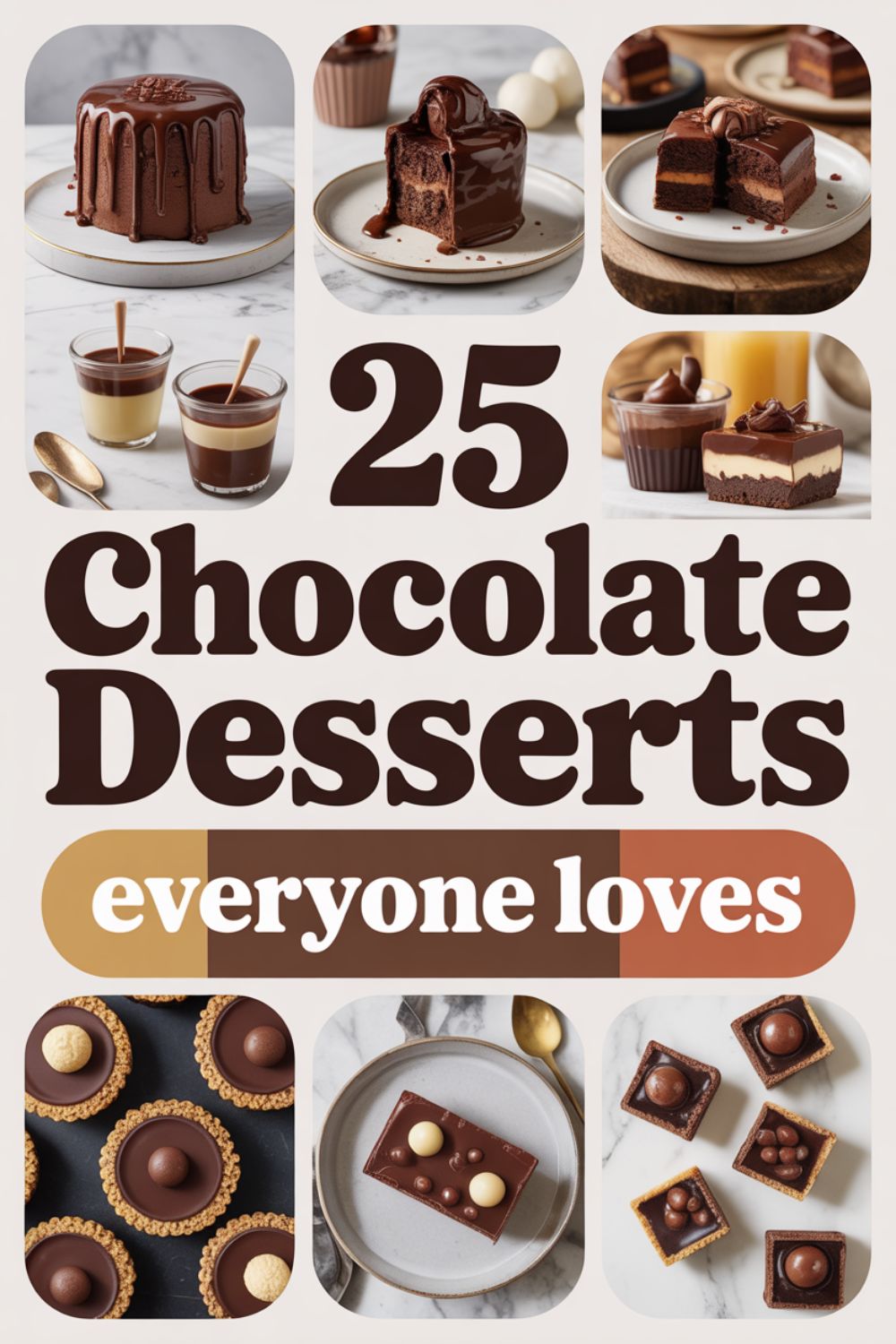
25 Classic Chocolate Desserts Everyone Loves
I’ve spent more time than I’d like to admit experimenting with chocolate desserts. Some turned out incredible, others… well, let’s just say the trash can got well-fed. Through all that trial and error, I’ve come to appreciate why certain chocolate desserts become classics. They’re not just about taste—they’re about reliability, nostalgia, and that perfect balance of effort versus reward.
So whether you’re looking to impress someone special or just need a solid chocolate fix at 10 PM on a Tuesday, these 25 classics have your back. And FYI, I’m not ranking them because honestly, that would be like choosing a favorite child. They’re all winners in their own delicious way.
These are the kitchen basics that make these recipes easy: creamy, rich and picture-perfect, the kind of treat your family asks for again and again.
- digital kitchen scaleCheck today’s price →
- offset spatulaCheck today’s price →
- double boiler setupCheck today’s price →
- parchment paperCheck today’s price →
Amazon prices and deals change often, so it’s worth checking today’s price.
Why Classic Chocolate Desserts Never Go Out of Style
Here’s something I’ve noticed: people always chase the latest dessert trend, but they inevitably come back to the classics. And there’s actual science behind why chocolate hits different. Research from Johns Hopkins Medicine shows that dark chocolate contains powerful antioxidants and flavonols that can benefit heart health and even reduce stress hormones. Not that you needed another excuse, but hey, it’s nice to know.
The beauty of classic chocolate desserts is that they’ve been tested by literally generations of home bakers. Your great-grandma didn’t have time for recipes that flopped, and neither do you. These desserts work because they’ve been refined through countless kitchen disasters until only the foolproof versions survived.
Plus, let’s be real—when someone asks you to bring dessert, you’re not gambling with some untested Pinterest experiment. You’re reaching for a classic that you know will deliver. That’s just smart planning.
The Essential Equipment You Actually Need
Before we dive into the desserts themselves, let’s talk tools. I’m not going to tell you that you need a marble countertop or a $400 stand mixer. But there are a few pieces of equipment that make chocolate dessert-making significantly less painful.
First up, invest in a decent digital kitchen scale. Baking is chemistry, and measuring by volume is how you end up with dry brownies. When I finally switched to weighing ingredients, my success rate shot up dramatically. You don’t need anything fancy—just something accurate to 1 gram.
Next, get yourself a proper offset spatula. I resisted this for years thinking it was unnecessary, but it’s genuinely a game-changer for frosting cakes and spreading batter evenly. The angled design gives you so much more control than a regular butter knife ever could.
For melting chocolate (which you’ll be doing a lot), a double boiler setup is clutch. You can buy a fancy one or just use a heat-safe bowl over a pot of simmering water. Either way, it prevents that heartbreaking moment when your chocolate seizes up into a grainy mess because you overheated it.
And here’s a pro tip I wish someone had told me earlier: line your baking pans with parchment paper instead of just greasing them. The cleanup is infinitely easier, and your brownies won’t stick to the pan like they’re superglued. I use these pre-cut sheets that fit perfectly—no more wrestling with a roll of parchment.
Pro Tip: Keep a silicone baking mat on hand for cookies. Unlike parchment, they’re reusable and give you the most even browning. Mine’s been through probably 500 batches and still going strong.
1. Classic Chocolate Chip Cookies
Let’s start with the obvious one. Chocolate chip cookies might seem basic, but there’s a reason they’re the most popular cookie in America. The ratio of crispy edges to chewy center, the melty chocolate chips, the slight salt that makes everything pop—it’s perfection in cookie form.
What makes a chocolate chip cookie truly classic is the balance. You want enough chocolate that you get some in every bite, but not so much that it becomes a chocolate cookie with some dough holding it together. The dough should have that golden-brown color from real butter and brown sugar, not the pale yellow of shortening.
One thing I learned the hard way: don’t skip the chilling step. I know it’s tempting to go straight from mixing to baking, but letting the dough rest in the fridge for at least 30 minutes does magical things to the texture. The cookies spread less, brown more evenly, and develop this almost toffee-like flavor depth.
If you want to level up your cookie game, try browning your butter first. It adds this nutty, caramelized note that makes people ask what your secret ingredient is. Spoiler: it’s just patience and an extra pan to wash.
2. Chocolate Brownies
The great brownie debate: fudgy versus cakey. I’m firmly in the fudgy camp, but I respect that some people like their brownies to have actual structure. Either way, a good brownie should have that shiny, crackly top that tells you the sugar crystallized just right.
The secret to fudgy brownies is surprisingly simple—use more fat and less flour than you think you need. A lot of recipes try to health-ify brownies by cutting back on butter or using applesauce (please don’t), but that just gives you chocolate-flavored disappointment. Embrace the butter. It’s literally what makes them good.
For the chocolate itself, I use a combination of melted chocolate and cocoa powder. The melted chocolate gives you that fudgy texture, while the cocoa powder intensifies the chocolate flavor without adding extra fat. It’s the best of both worlds.
One mistake people make is overbaking. Your brownies are done when there’s still a slight jiggle in the center—they’ll firm up as they cool. If you wait until a toothpick comes out completely clean, you’ve already gone too far. For more easy brownie variations, check out these dessert bars that use similar techniques.
Quick Win: Line your brownie pan with parchment paper leaving some overhang on the sides. Once they’re cool, you can lift the whole batch out and cut perfect squares without mangling the corner pieces.
3. Chocolate Cake with Ganache
A proper chocolate cake is the backbone of any dessert repertoire. I’m talking about a real, from-scratch cake—not a box mix (though honestly, no judgment if that’s your jam). The difference is in the crumb structure and the depth of chocolate flavor.
Most classic chocolate cake recipes use both cocoa powder and coffee. The coffee doesn’t make it taste like mocha; it actually amplifies the chocolate flavor in this weird but wonderful way. I was skeptical the first time I tried it, but now I can’t imagine making chocolate cake without it.
The ganache is where things get fancy with minimal effort. It’s literally just chocolate and cream heated together until smooth. You can pour it over the cake for a glossy finish, or let it cool and whip it for a lighter frosting texture. Either way, it makes you look way more skilled than you actually are.
Here’s something nobody tells you: room temperature ingredients matter way more in cakes than in other desserts. Cold eggs and butter don’t incorporate properly, and you end up with a dense, uneven texture. Just set everything out 30 minutes before you start baking. Worth the wait.
4. Chocolate Mousse
Chocolate mousse has this reputation for being difficult, but it’s honestly one of the easiest impressive desserts you can make. The French have been making it for centuries with just chocolate, eggs, and maybe some cream. No mixer required.
The key is folding. You’re incorporating air into the mixture, so you need to be gentle. Think of it like you’re trying not to wake up a sleeping cat—delicate movements, no sudden jerks. If you stir too aggressively, you’ll knock out all the air you just worked to get in there.
I use dark chocolate with at least 70% cacao for mousse. It gives you a richer flavor and, according to research on chocolate’s health benefits, provides more of those beneficial flavanols. Plus, the slight bitterness balances out the sweetness perfectly.
Serve it in small portions—mousse is rich enough that a little goes a long way. I like using glass ramekins because they show off the texture and make it feel fancier than it actually is.
5. Molten Lava Cakes
Molten lava cakes are that restaurant dessert that seems impossible to replicate at home, except they’re shockingly easy. The “lava” isn’t some complicated filling—it’s just the center that stays undercooked while the edges set up.
Timing is everything here. You want to bake them just long enough that the edges are set but the center is still gooey. This usually takes about 12-14 minutes at 425°F, but every oven is different. I recommend doing a test run before you make them for company.
Butter and flour your ramekins religiously. Nothing worse than nailing the texture but having the cake stick to the dish when you try to invert it. I go overboard with the butter, then dust with cocoa powder instead of flour for extra chocolate points.
These need to be served immediately—the lava center will set up if you let them sit too long. But honestly, that moment when you cut into a warm lava cake and the chocolate starts flowing out? Pure magic. No wonder restaurants charge $12 for them.
6. Chocolate Truffles
Truffles sound fancy, but they’re basically just ganache rolled into balls and coated in something. That’s it. You can make a batch in like 20 minutes of active work, plus chilling time.
The ratio for truffle ganache is different from frosting ganache—you want it firmer so it holds its shape. I use equal parts chocolate and cream, sometimes with a tablespoon of butter for extra richness. Once it’s chilled, you scoop it out, roll it quickly (warm hands will melt it), and coat it in cocoa powder, crushed nuts, or shredded coconut.
Pro tip: use a small cookie scoop to portion the ganache. Your truffles will be uniform in size, which makes them look more professional. Plus, your hands stay cleaner.
Truffles are one of those desserts that people assume took hours of work. Let them think that. The chocolate-to-effort ratio here is absolutely unbeatable. Speaking of easy chocolate treats, these quick desserts are perfect when you need something fast but impressive.
7. Hot Fudge Sundae
Ice cream sundaes are technically a dessert even though they’re mostly just ice cream with stuff on top. But a good hot fudge sauce elevates it from snack to proper dessert territory.
The key to hot fudge is that it should actually harden slightly when it hits the cold ice cream. That texture contrast—cold ice cream, warm fudge that gets a little firm—is what makes it special. Store-bought chocolate sauce just stays liquid, which is fine but not the same thing.
Making hot fudge is stupid simple: cocoa powder, butter, sugar, cream, and a pinch of salt. You just cook it until it thickens slightly. The whole process takes maybe 10 minutes. I make a jar of it and keep it in the fridge, then warm up what I need.
For the ice cream, vanilla is classic, but coffee ice cream with hot fudge is criminally underrated. The bitter notes in both just amplify each other. Add some whipped cream and crushed peanuts if you’re feeling ambitious.
8. Chocolate Pudding (from Scratch)
Hear me out on this one. I know instant pudding exists and it’s fine, but homemade chocolate pudding is on another level entirely. The texture is silkier, the chocolate flavor is more pronounced, and it doesn’t have that weird aftertaste from whatever stabilizers they use in the instant stuff.
The process is straightforward: you’re making a cornstarch-thickened custard with chocolate melted into it. The only tricky part is tempering the eggs so they don’t scramble, but even that becomes second nature after you do it once or twice.
I like using a combination of chocolate types—some bittersweet for depth, some milk chocolate for sweetness. It gives you a more complex flavor than using just one type. And definitely use whole milk and heavy cream, not low-fat milk. The fat is what makes it creamy.
Serve it warm or chilled, both are good in different ways. Warm chocolate pudding is basically hot chocolate you can eat with a spoon, and chilled pudding has this perfect, spoonable consistency that’s incredibly satisfying.
9. S’mores (Done Right)
S’mores are technically a chocolate dessert, and yes, they absolutely belong on this list. The combination of graham crackers, melted chocolate, and gooey marshmallow is iconic for a reason.
But here’s where people mess up: they use regular Hershey’s bars. Nothing wrong with that, but you can level up significantly with better chocolate. Try a square of dark chocolate or even chocolate with sea salt. Game changer.
For the marshmallow, you want it golden brown, not charred to death. A low, steady heat will get you that perfect exterior while the inside melts completely. Burned marshmallow tastes like sadness and regret.
If you don’t have a campfire, you can make s’mores in your oven. Put the marshmallow on a graham cracker, broil until golden, then add chocolate and top with another cracker. Not quite the same as fireside, but it works in a pinch. For more ways to enjoy chocolate without turning on the oven, check out these no-bake options.
Pro Tip: Use marshmallow roasting sticks that are long enough to keep you at a safe distance from the fire. Those short sticks just result in singed arm hair and unevenly cooked marshmallows.
10. Chocolate Eclair
Eclairs are fancy-looking but surprisingly approachable. You’re making choux pastry (which is easier than it sounds), filling it with pastry cream, and topping it with chocolate glaze. Each component is simple; it’s just doing all three that makes it seem fancy.
The choux pastry is actually the easiest part once you understand what you’re looking for. You cook flour and butter together, then beat in eggs until the dough is smooth and glossy. It should fall off the spoon in a thick ribbon. That’s your goal.
For the filling, chocolate pastry cream is traditional, but vanilla with chocolate glaze is equally classic. IMO, the vanilla version lets the chocolate glaze shine more. But you can’t really go wrong either way.
The glaze should be thin enough to pour but thick enough to coat the top without running down the sides. Getting that consistency right takes practice, but even if it’s a little runny, it still tastes good.
11. Chocolate Chip Muffins
Muffins are basically acceptable breakfast cake, and chocolate chip muffins are the best kind. They’re not quite as sweet as dessert, but sweet enough that they feel like a treat.
The difference between a muffin and a cupcake is mostly the mixing method. Muffins use the muffin method (creative name, right?) where you mix dry and wet ingredients separately, then fold them together just until combined. This keeps them tender instead of cake-like.
Don’t overmix the batter. Those lumps you see? They’re supposed to be there. Overmixing develops gluten, which makes your muffins tough and dense. Nobody wants a hockey puck muffin.
Fill your muffin cups pretty full—like 3/4 of the way. This gives you those nice domed tops that look bakery-quality. And use paper liners unless you enjoy scrubbing muffin tins. Life’s too short for unnecessary cleanup.
12. Chocolate Soufflé
Soufflés have this mystique around them, like they’re the Mount Everest of desserts. Honestly? They’re more like a medium-sized hill. The technique matters, but it’s not as finicky as people claim.
The basic idea is you’re making a chocolate base, folding in beaten egg whites, and baking it until it puffs up dramatically. The egg whites are what make it rise, so you need to beat them to stiff peaks—but not so stiff that they’re dry and grainy.
Folding is crucial here, same as with mousse. You want to maintain as much air as possible while still getting everything combined. I use a rubber spatula and work in three additions, being gentler with each one.
Soufflés do deflate after a few minutes out of the oven, which is why they need to be served immediately. Set the table, make everyone sit down, then take it out of the oven and rush it to the table. The drama is part of the appeal.
13. Chocolate Fudge
Real fudge is a candy, not a dessert, but it’s chocolatey enough that I’m counting it. And by real fudge, I mean the kind you make with a candy thermometer, not the marshmallow fluff shortcut version (though that has its place too).
Traditional fudge requires you to cook sugar and cream to the soft-ball stage (238°F), then beat it as it cools to create that characteristic grainy-smooth texture. It’s more chemistry than cooking, and honestly, I recommend trying it at least once just to understand the process.
That said, the marshmallow fluff method is way more foolproof. You melt chocolate chips with sweetened condensed milk and marshmallow fluff, pour it in a pan, and you’re done. It doesn’t have quite the same texture, but it’s still really good and you won’t waste ingredients on failed batches.
Either way, add some walnuts or pecans to your fudge. The slight bitterness and crunch balance out the sweetness. Plus, it makes you feel like you’re getting some nutritional value (you’re not, but we can pretend).
14. Chocolate Croissant
Okay, I’m going to level with you: making croissants from scratch is a multi-day commitment that requires you to be mildly insane. But buying frozen croissant dough and stuffing it with chocolate? That’s doable and still delicious.
The French call these “pain au chocolat,” and they’re basically what happens when someone realized croissants could be even better. You wrap the dough around chocolate sticks (or chocolate chips in a pinch), let them rise, and bake until golden and flaky.
If you do want to attempt homemade laminated dough, just know it’s going to take you at least two days with multiple folding and chilling sessions. But the result is legitimately one of the best things you can bake. The layers, the butter, the chocolate melting inside—it’s worth it if you have the time and patience.
For the chocolate, use good quality stuff. This isn’t the time for waxy chocolate chips. Get actual chocolate bars, preferably something with at least 60% cacao. You want it to taste like chocolate, not sugar.
15. Chocolate Covered Strawberries
Chocolate covered strawberries are the definition of simple elegance. It’s literally two ingredients: strawberries and chocolate. Yet somehow it feels fancy enough for special occasions.
The key is proper tempering if you want that glossy finish and satisfying snap. Tempered chocolate sets up shiny and stable, while untempered chocolate looks dull and can bloom (those white streaks that aren’t harmful but look kind of gross).
But real talk? For home use, I usually skip tempering and just melt the chocolate with a tiny bit of coconut oil. It won’t have quite the same snap, but it’s significantly easier and still looks good. Most people won’t notice the difference anyway.
Make sure your strawberries are completely dry before dipping them. Any moisture will make the chocolate seize up into a grainy mess. Pat them dry with paper towels and let them sit for a few minutes before you start dipping. If you’re looking for more simple chocolate treats, these 3-ingredient desserts are perfect for beginners.
Quick Win: Use a chocolate melting pot if you’re doing a lot of dipping. It keeps the chocolate at the perfect consistency without burning, and the narrow shape makes dipping way easier than trying to use a wide bowl.
16. Mississippi Mud Pie
Mississippi Mud Pie is one of those Southern classics that’s basically a sugar coma in pie form. It’s got a chocolate cookie crust, a fudgy brownie-like filling, and usually gets topped with whipped cream or ice cream.
The name supposedly comes from the muddy banks of the Mississippi River, which is either charming or kind of gross depending on how you look at it. Either way, the pie itself is amazing.
I make the filling similar to brownies but with more eggs so it sets up properly in the pie shell. You want it rich and fudgy, but still sliceable. If it’s too wet, you end up with chocolate soup in a crust, which is delicious but not exactly pie.
Serve it slightly warm with vanilla ice cream melting on top. The contrast between warm chocolate and cold ice cream is why this dessert has survived this long. It’s just that good.
17. Chocolate Meringue Cookies
Meringue cookies are basically air held together by sugar and prayers. But chocolate meringue cookies are that same airy texture with actual chocolate flavor, which makes them way more interesting than plain meringue.
You fold cocoa powder into beaten egg whites, pipe them onto a baking sheet, and bake them at a low temperature until they dry out completely. The result is crispy, light, and just barely sweet.
The trick is getting your egg whites to stiff peaks without overbeating. Overbeaten egg whites look grainy and won’t incorporate properly. You want them glossy and smooth, with peaks that stand straight up.
These cookies are great if you want something sweet but not heavy. They’re also naturally gluten-free, which makes them useful for accommodating dietary restrictions without having to break out special ingredients.
18. Chocolate Tiramisu
Traditional tiramisu is coffee-flavored, but chocolate tiramisu takes that concept and makes it even better (fight me). You’re still using ladyfinger cookies and mascarpone cream, but you add cocoa and chocolate to the mix.
The layers are what make tiramisu special. You dip the ladyfingers in coffee (or chocolate milk if you want to go full chocolate), layer them with the mascarpone mixture, and repeat. Let it sit overnight so everything melds together into this incredible texture.
Don’t oversoak the ladyfingers. A quick dip is enough—if they get too wet, your tiramisu turns into mush. Just a brief swim through the coffee is all you need.
Top the whole thing with a heavy dusting of cocoa powder. It looks elegant and adds another layer of chocolate flavor. Plus, it covers up any imperfections in your assembly, which is a bonus for those of us who aren’t pastry chefs.
19. Flourless Chocolate Cake
Flourless chocolate cake is gluten-free by default, which is great. But more importantly, it’s incredibly rich and dense in the best way possible. It’s basically between a fudge brownie and a chocolate truffle in texture.
The base is just chocolate, butter, eggs, and sugar. No flour means all the flavor comes from the chocolate, so use good quality stuff. This isn’t the place for baking chocolate from the grocery store—get something you’d actually want to eat on its own.
Most recipes have you beat the egg whites separately and fold them in for a lighter texture. Personally, I sometimes skip this step and just mix everything together for an even denser result. Both versions are good, just different.
Serve it with whipped cream or berry compote. The richness needs something to cut through it, and the slight tang of berries or cream does that perfectly. A thin slice goes a long way with this one.
20. Chocolate Fondue
Fondue might seem retro, but it’s actually a pretty brilliant dessert concept. Melt some chocolate, provide dippable items, and let people do the work themselves. It’s interactive, it’s fun, and cleanup is minimal since everyone uses their own plate.
For the chocolate, I use a mix of dark and milk chocolate for balance. Add some heavy cream to keep it smooth and flowing, maybe a splash of vanilla or liqueur if you’re feeling fancy. That’s it.
The real key is having good dippers. Fresh fruit is obvious—strawberries, bananas, apple slices all work great. But don’t sleep on pound cake cubes, marshmallows, pretzels, or even potato chips (sweet and salty is a thing for a reason).
If you don’t have an actual fondue pot, just use a small slow cooker on the warm setting. It keeps the chocolate at the perfect consistency without burning. Way easier than dealing with a burner and tea lights. For more kid-friendly chocolate ideas, check out these desserts to make with kids.
21. Chocolate Peanut Butter Cups
Homemade peanut butter cups are shockingly easy and taste way better than store-bought. The chocolate is richer, you can control the peanut butter to chocolate ratio, and they don’t have that weird waxy texture of commercial versions.
You just need mini muffin liners, melted chocolate, and peanut butter mixed with powdered sugar. Layer chocolate on the bottom, add the peanut butter filling, top with more chocolate. Let them set in the fridge and you’re done.
The powdered sugar in the peanut butter filling is important—it gives it the right texture so it’s not just straight peanut butter, which would be too soft. You want it to firm up slightly so it holds its shape.
You can also experiment with different nut butters. Almond butter, cashew butter, even cookie butter—they all work. The chocolate-nut butter combination is pretty foolproof regardless of which nut butter you choose.
22. Chocolate Bark
Chocolate bark is what you make when you want to look like you put in effort but actually didn’t. Melt chocolate, spread it thin, add toppings, let it harden. That’s the whole recipe.
The beauty is in the toppings. You can go sweet with candy pieces and dried fruit, savory with pretzels and sea salt, or festive with crushed peppermint. Each combination gives you a completely different bark.
For a professional look, spread the melted chocolate on a parchment-lined baking sheet and make it as smooth as possible. Then add your toppings in a pattern instead of just dumping them on randomly. It makes a difference in how it looks when you break it into pieces.
Once it’s hardened, break it into irregular shards. The jagged pieces look more artisanal than if you cut it into perfect squares. Plus, irregular pieces are way easier since you just snap it with your hands.
23. Black Forest Cake
Black Forest Cake is German chocolate cake taken to the next level with cherries and whipped cream. It’s got layers of chocolate cake, cherry filling, and mountains of whipped cream, all garnished with chocolate shavings.
The traditional version uses kirsch (cherry brandy) to soak the cake layers, which adds a subtle cherry flavor and keeps the cake moist. If you’re making this for kids or don’t want alcohol, cherry juice works fine too.
For the cherries, you can use fresh, frozen, or canned. Fresh tastes better obviously, but frozen works well and is available year-round. Studies show that cherries combined with dark chocolate provide a powerful combination of antioxidants. Just cook them down with some sugar until they’re jammy.
The whipped cream frosting is lighter than buttercream, which balances out how rich the chocolate cake is. Make sure you stabilize it with a bit of gelatin or powdered sugar so it doesn’t deflate after a few hours.
24. Chocolate Cannoli
Cannoli are Sicilian pastries with a crispy shell and creamy ricotta filling. Add cocoa to the ricotta filling, and you’ve got chocolate cannoli. Add chocolate chips to that filling, and you’ve reached dessert nirvana.
Making the shells from scratch is a project—you need to fry them and shape them around special tubes. Honestly? Buy the shells pre-made. Your time is valuable, and fresh shells from an Italian bakery or specialty store are probably better than what you’d make anyway.
The filling is where you put your energy. Mix ricotta with powdered sugar, cocoa powder, and mini chocolate chips. Some people add mascarpone for extra richness. Don’t fill them until right before serving, or the shells get soggy.
Dust the finished cannoli with powdered sugar and maybe dip the ends in more chocolate chips. They look impressive, taste amazing, and nobody needs to know you didn’t make every component from scratch.
25. Chocolate Banana Bread
Banana bread is already great, but adding chocolate makes it undeniably a dessert instead of breakfast masquerading as such. The banana keeps it moist, and the chocolate makes it actually worth the calories.
Use really ripe bananas—like, the ones you’re about to throw out because they’re too brown. Those are perfect. The riper they are, the sweeter and more flavorful your bread will be. If your bananas aren’t ripe enough, just wait. Patience pays off here.
I add both cocoa powder to the batter and chocolate chips mixed in. Double chocolate is always the right answer. You could also swirl in some Nutella if you’re feeling extra.
Bake it in a loaf pan at a lower temperature (around 325°F) so it cooks through without the outside burning. Test it with a toothpick—a few moist crumbs are fine, but you don’t want raw batter. If you love baking with simple ingredients, these 5-ingredient desserts are perfect for quick baking projects.
Speaking of banana-chocolate combinations, if this sounds good to you, you might also enjoy these pantry staple desserts or try some quick mug cakes for single-serve chocolate fixes.
Common Questions About Classic Chocolate Desserts
What’s the easiest classic chocolate dessert to start with?
Chocolate chip cookies or brownies are your best bet for beginners. They’re pretty forgiving and don’t require any special techniques. Even if you mess up slightly, they’ll still taste good. Plus, you probably already have most of the ingredients in your pantry.
Can I use cocoa powder instead of melted chocolate in most recipes?
Not always—cocoa powder and melted chocolate behave differently in recipes. Cocoa powder is dry and lacks the fat that chocolate has, so swapping them affects both texture and moisture. Some recipes specifically call for one or the other for a reason, so it’s best to stick with what’s listed unless you really know what you’re doing.
How do I prevent my chocolate from seizing when melting?
Keep water away from your chocolate—even a drop can cause it to seize into a grainy mess. Use a double boiler or microwave in short bursts, stirring frequently. If it does seize, sometimes adding a tablespoon of warm cream or coconut oil can smooth it back out, though the texture might not be perfect.
Is there really a difference between cheap and expensive chocolate for baking?
Honestly? Yes, especially in recipes where chocolate is the star. Higher quality chocolate has better flavor and smoother texture. That said, for things like chocolate chip cookies where it’s mixed with other strong flavors, mid-range chocolate works fine. Save the fancy stuff for ganache, mousse, or anything where chocolate is the main event.
Can I freeze most chocolate desserts for later?
Most chocolate desserts freeze surprisingly well. Brownies, cookies, unfrosted cakes, and even some mousses can be frozen for up to 3 months. Just wrap them tightly in plastic wrap and then foil to prevent freezer burn. Cream-based desserts and those with fresh fruit don’t always freeze as well, so use your judgment. If you want more make-ahead options, check out these freezer-friendly desserts.
The Sweet Spot of Classic Desserts
So there you have it—25 chocolate desserts that have earned their classic status through decades (sometimes centuries) of making people happy. These aren’t trendy desserts that’ll be forgotten next year. They’re the reliable heavy hitters that show up at every celebration, comfort you on bad days, and generally make life a little sweeter.
The best part? You don’t need to be a pastry chef to make any of these. Sure, some take more time and effort than others, but they’re all doable with basic equipment and standard ingredients. Start with the easier ones like cookies or brownies, and work your way up to the more ambitious projects like croissants or soufflés.
And look, I’m not going to tell you that chocolate desserts are health food. But there’s something to be said for treats that bring joy, and these classics have been doing exactly that for generations. Life’s too short to skip dessert—especially when it’s chocolate.
Now if you’ll excuse me, all this talk about chocolate has me craving brownies. I know exactly which batch I’m making tonight.