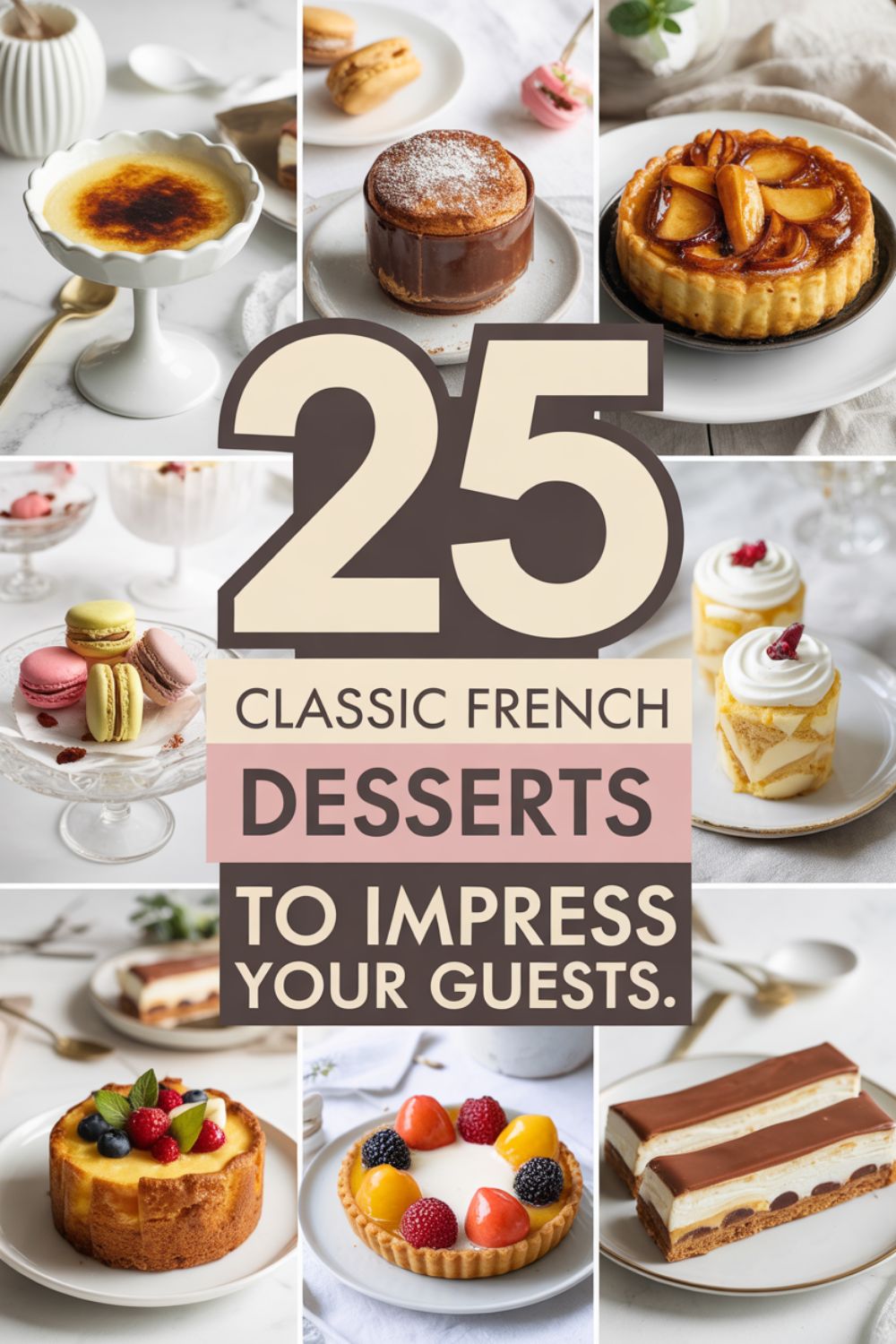
25 Classic French Desserts to Impress Your Guests

25 Classic French Desserts to Impress Your Guests
Look, I’m not saying you need to master French pastry to throw a dinner party people will actually remember. But here’s the thing—French desserts have this weird magic where they make everything feel fancier, even if you’re serving them on paper plates. They’re like the little black dress of the dessert world: timeless, elegant, and somehow always appropriate.
I’ve spent years testing these recipes, burning more crème brûlées than I care to admit, and learning that French baking isn’t nearly as scary as those cooking shows make it seem. Sure, some techniques take practice, but most of these desserts? They’re shockingly doable. And the payoff when your guests think you’ve been secretly attending Le Cordon Bleu? Totally worth it.
Whether you’re hosting a fancy dinner party or just want to impress your in-laws, these 25 classic French desserts will make you look like a culinary genius. No culinary degree required—just a willingness to get a little butter on your hands.
These are the kitchen basics that make these recipes easy: creamy, rich and picture-perfect, the kind of treat your family asks for again and again.
- kitchen torchCheck today’s price →
- shallow ceramic ramekinsCheck today’s price →
- cast-iron skilletCheck today’s price →
- stand mixerCheck today’s price →
Amazon prices and deals change often, so it’s worth checking today’s price.
1. Crème Brûlée: The Showstopper That’s Easier Than You Think
Let’s start with the one dessert that makes everyone go “ooh” when you crack that sugar shell. Crème brûlée is basically fancy custard with a crunchy top, and yes, you absolutely need a kitchen torch for this. Don’t even try the broiler method—I’ve tried it, and it’s a one-way ticket to burnt-cream city.
The base is just cream, egg yolks, sugar, and vanilla. That’s it. The secret is baking them in a water bath so they cook evenly without curdling. I use these shallow ceramic ramekins because they give you the perfect custard-to-crust ratio. Too deep, and you’re eating mostly custard. Too shallow, and you’ve basically made burnt sugar soup.
The best part? You make these the day before, torch them right before serving, and watch your guests’ faces light up. According to Auguste Escoffier School of Culinary Arts, this dessert dates back to the 1600s, proving that some things never go out of style.
2. Macarons: Tiny, Colorful, and Surprisingly Addictive
Okay, real talk—macarons are finicky. They’re the divas of the dessert world. Too much humidity? Failed. Overmixed the batter? Failed. Looked at them wrong? Probably also failed. But when you nail them, you feel like a baking god.
The French meringue method is more forgiving than the Italian method for beginners. You’ll need almond flour (not almond meal—there’s a difference), powdered sugar, egg whites, and food coloring if you want them Instagram-worthy. I picked up a silicone macaron mat after my third batch came out looking like sad, lumpy cookies, and honestly, it’s a game-changer.
Fill them with anything from buttercream to ganache to jam. My personal favorite is salted caramel because sweet and salty is basically the flavor combination that launched a thousand food blogs. If macarons intimidate you but you still want that wow factor, check out these easy desserts you can make in under 30 minutes for less stressful options.
3. Tarte Tatin: The Upside-Down Apple Tart That Started as a Mistake
This is my favorite kind of recipe—one born from a kitchen disaster. Legend has it that the Tatin sisters accidentally left apples cooking in butter and sugar too long, threw pastry on top to save it, then flipped the whole thing over. And boom—culinary icon.
You caramelize apple slices in butter and sugar until they’re golden and jammy, cover them with puff pastry, bake, then flip. The result is sticky, caramelized fruit under a crispy pastry lid. I use a cast-iron skillet for this because it goes from stovetop to oven without complaining, and the heat distribution is perfect for even caramelization.
Serve it warm with vanilla ice cream or crème fraîche. The contrast between hot caramel and cold cream is chef’s kiss. For more apple-based inspiration, you might love these desserts you can make with pantry staples.
4. Profiteroles: Little Cream Puffs That Taste Like Clouds
Choux pastry sounds intimidating, but it’s actually just butter, water, flour, and eggs. The magic happens when steam puffs them up in the oven, creating hollow shells perfect for filling with whipped cream, pastry cream, or ice cream.
The key is beating the dough enough to incorporate the eggs fully—your arm will get tired, but that’s how you know you’re doing it right. Or just use a stand mixer like a normal person. I fill mine with vanilla pastry cream and drizzle them with warm chocolate sauce because I’m not a monster.
These are also called cream puffs in some places, but calling them profiteroles makes you sound 47% fancier. Science fact.
5. Mille-Feuille: A Thousand Layers of Deliciousness
Also known as a Napoleon (though not in France, because that would be weird), this pastry is all about crispy puff pastry layers with pastry cream in between. The name literally means “a thousand leaves,” which is poetic for “lots of flaky layers.”
You can make your own puff pastry if you hate yourself and have six hours to kill, or you can buy the frozen stuff like a reasonable human. I won’t judge. Layer it with vanilla pastry cream, top with fondant icing, and try not to make a complete mess when you cut it. Spoiler: you will make a mess. Everyone does. It’s part of the experience.
The crunch-to-cream ratio is everything here. Too much pastry and it’s dry. Too much cream and it squirts everywhere when you take a bite. Balance is key, grasshopper.
6. Clafoutis: The Custardy Fruit Dessert That Fixes Everything
This is what happens when custard and fruit have a baby in a baking dish. Traditionally made with cherries (specifically unpitted ones, because French people apparently enjoy dental hazards), but you can use any fruit. I’ve done it with blueberries, plums, and once with peaches that were about to turn.
The batter is dead simple—eggs, sugar, flour, milk, and vanilla. Pour it over fruit, bake, and you’ve got a dessert that’s somehow both elegant and rustic. It puffs up in the oven, then deflates as it cools, which is normal and not a sign that you’ve failed at life.
Serve it warm, dusted with powdered sugar, and watch people ask for seconds. I use a ceramic tart pan because it conducts heat evenly and looks pretty enough to bring straight to the table. See next: 20 Classic Pie Recipes You Can Make at Home → to make this tonight.
7. Madeleines: The Little Shell Cakes That Made Proust Famous
These tiny sponge cakes are baked in a special shell-shaped mold and taste like lemony, buttery clouds. Proust wrote an entire novel inspired by dipping one in tea, which tells you everything about how good they are.
The batter needs to rest in the fridge before baking—it helps develop that characteristic bump on the back. Don’t skip this step unless you want flat, sad madeleines. They’re best eaten the day they’re made, preferably still slightly warm, with coffee or tea.
The lemon zest is non-negotiable. It’s what makes them sing. I also brush mine with melted butter right out of the oven because more butter is always the answer.
8. Financiers: Almond Cakes That Actually Taste Like Wealth
Named after the financial district where they were first sold, these little almond cakes are made with browned butter, almond flour, and egg whites. They’re chewy in the middle, crispy on the edges, and taste like someone condensed luxury into a tiny rectangle.
The brown butter is crucial—it adds a nutty, caramel flavor that regular melted butter just can’t compete with. Watch it carefully though, because the line between “beautifully browned” and “burnt and bitter” is about 30 seconds.
I bake these in a mini financier pan, but you can also use a muffin tin. They freeze beautifully, which means you can pretend you whipped them up fresh when really you made them three weeks ago. Your secret is safe with me.
Speaking of bite-sized treats, if you’re into quick desserts that still impress, these quick mug cakes might become your new obsession.
9. Chocolate Mousse: The Classic That Never Gets Old
French chocolate mousse is all about technique. You’re not dumping everything in a bowl and calling it done. You’re folding whipped egg whites into a chocolate base with the gentle touch of someone defusing a bomb, because overmixing deflates the whole thing.
Use good chocolate—at least 60% cacao. This isn’t the time for that waxy stuff you find in the clearance bin. I’m partial to Valrhona, but any quality dark chocolate works. The texture should be light and airy, not dense and heavy like pudding’s disappointing cousin.
According to Bon Appétit’s culinary historians, chocolate mousse became popular in the 1800s, and honestly, humanity has been making the right choice ever since. Serve it in individual glasses, top with whipped cream, and maybe some shaved chocolate if you’re feeling fancy.
10. Île Flottante: Floating Island That Sounds Weird But Tastes Amazing
This is basically poached meringue floating in crème anglaise with caramel drizzled on top. It sounds bizarre, but it’s one of those desserts that makes sense the second you taste it. Light, creamy, sweet—everything you want after a heavy meal.
The meringue is delicate, so handle it like you’re moving a sleeping baby. You poach it in barely simmering milk, then let it drain before placing it on the custard. The caramel is just sugar cooked until golden, drizzled over in those Instagram-worthy streaks.
This is a great make-ahead dessert because you can prep all the components separately and assemble right before serving. Just don’t poach the meringue more than a few hours ahead or it gets weepy.
11. Paris-Brest: The Wheel-Shaped Pastry Named After a Bike Race
Created to commemorate a bicycle race between Paris and Brest, this choux pastry ring is filled with praline cream and topped with sliced almonds. It’s basically a giant profiterole that went to finishing school.
The praline cream is where the magic happens—butter, praline paste, and pastry cream whipped into something that tastes like spreadable happiness. You can buy praline paste online, or make your own if you’re feeling ambitious and own a food processor that can handle molten sugar.
Slice it like a cake and watch people marvel at the layers. It’s impressive without being stupidly difficult, which is my favorite kind of dessert.
12. Canelés: The Caramelized Ridged Cakes from Bordeaux
These little guys look like tiny, ridged cylinders with a dark, caramelized crust and a custardy center. They’re flavored with rum and vanilla, and they’re weirdly addictive. You’ll need special canelé molds—copper if you’re fancy, silicone if you’re practical.
The batter needs to rest overnight, and the molds need to be buttered and frozen before you fill them. Yes, it’s fussy. Yes, it’s worth it. The contrast between the crunchy exterior and soft interior is unmatched.
These are best eaten the day they’re made, preferably within a few hours of coming out of the oven. After that, they start to lose their crispy shell and become merely good instead of transcendent.
13. Crêpes Suzette: Flambéed Pancakes That Bring the Drama
Thin French pancakes flambéed in orange butter sauce—because why not add fire to your dessert? The technique is surprisingly simple: make crêpes, heat butter with orange juice and Grand Marnier, add the crêpes to warm them through, then light it on fire.
The alcohol burns off, leaving behind a concentrated orange flavor that’s absolutely worth the momentary heart attack when the flames shoot up. I use a crêpe pan because it’s wider and shallower than a regular skillet, making paper-thin crêpes easier to achieve.
This is peak dinner party showmanship. Dim the lights, ignite the sauce, and bask in the oohs and aahs. Just maybe keep a fire extinguisher nearby. You know, just in case.
14. Tarte au Citron: The Lemon Tart That Walks the Sweet-Tart Line
A proper French lemon tart is all about balance. Too sweet and it’s just sugary goop. Too tart and your guests’ faces will pucker like they’ve bitten into a Warhead. The filling should be smooth, silky, and just acidic enough to make you want another bite.
The crust is pâte sucrée—basically shortbread cookie dough—which holds up to the wet filling without getting soggy. Blind bake it with pie weights or dried beans, then fill it with lemon curd and bake again until just set. The top should be smooth and glossy, not browned.
I finish mine with a layer of Italian meringue torched to golden peaks, but you can skip that step if you’re not into extra credit. The tartness of lemon pairs beautifully with sweet meringue anyway. For more citrusy inspiration, try these healthy desserts that actually taste like treats.
15. Opera Cake: The Multi-Layered Coffee Masterpiece
This is not for beginners. This is for when you want to prove something. Opera cake has thin layers of almond sponge soaked in coffee syrup, layered with coffee buttercream and chocolate ganache, then covered in a chocolate glaze.
You need precision, patience, and a really good offset spatula for spreading those thin layers. The result is a sophisticated, not-too-sweet dessert that coffee lovers will worship. Each bite should have all the layers in perfect proportion.
According to traditional recipes documented by French culinary institutes, this cake was created in the 1950s and remains one of the most technically demanding French pastries.
16. Saint-Honoré: The Cream Puff Tower of Your Dreams
Named after the patron saint of bakers, this dessert is basically a cream-filled fortress. You’ve got a puff pastry base, a ring of caramel-dipped cream puffs, and chiboust cream (pastry cream lightened with Italian meringue) in the center.
The caramel acts as edible glue, holding the cream puffs in place. It’s architectural baking at its finest. You’ll need that kitchen torch again for the caramel, unless you enjoy third-degree burns from trying to dip things in molten sugar with your fingers.
This is a special occasion dessert. Birthday? Yes. Tuesday? Probably overkill. But if you nail it, you’ll never hear the end of how talented you are.
17. Pots de Crème: Individual Custards That Feel Like a Hug
These are basically crème brûlée’s chill cousin—rich, creamy custard baked in individual pots without the torched sugar drama. You can flavor them with chocolate, vanilla, coffee, or even Earl Grey if you’re into that.
The texture should be silky and smooth, which means you need to strain the mixture before pouring it into small ramekins. Bake them in a water bath like crème brûlée, but pull them when they’re still slightly jiggly in the center. They’ll continue cooking as they cool.
Top with whipped cream, a sprinkle of sea salt, or fresh berries. They’re elegant, make-ahead friendly, and portion-controlled so nobody accidentally eats half a pie in one sitting. Not that I’ve done that. Multiple times.
18. Kouign-Amann: The Caramelized Butter Bomb from Brittany
This is what happens when you decide regular pastry doesn’t have enough butter or sugar. Kouign-amann (pronounced “queen ah-mahn”) is layers of laminated dough with sugar that caramelizes as it bakes, creating a crispy, sticky, buttery masterpiece.
Making it from scratch is a labor of love involving multiple folds and rest periods. Or you can find them at a good French bakery and pretend you made them. I won’t tell. The individual versions look like caramelized roses and taste like edible gold.
Eat them warm for the full experience. The contrast between crispy edges and soft center is what breakfast dreams are made of—even though these are absolutely dessert, not breakfast. Probably.
19. Dacquoise: The Almond Meringue Layer Cake
Crispy almond meringue layers filled with buttercream or whipped cream, this cake has texture for days. The meringue should be crunchy on the outside, slightly chewy on the inside—like a macaron but in cake form.
You pipe the meringue into circles, bake low and slow, then fill with flavored buttercream. Coffee, chocolate, or hazelnut work beautifully. I use a piping bag with a round tip to get even layers, but you can also spread it if you’re not into precision.
The beauty of dacquoise is that the meringue layers can be made days ahead and stored in an airtight container. Assemble the cake a few hours before serving so the meringue softens slightly from the cream. If you’re into layered desserts, these easy dessert bars offer similar satisfaction with less effort.
20. Gâteau Basque: The Jam-Filled Cake from the Pyrenees
This rustic cake from the Basque region is basically a buttery shortbread shell filled with pastry cream or black cherry jam. It’s less fussy than most French desserts, which is why I love it.
The dough is rich and tender, almost like a thick cookie. You press half into a pan, add filling, then top with the remaining dough and score a decorative pattern on top. Brush with egg wash for that golden sheen.
The cherry version is traditional, but the pastry cream version is my personal favorite. It’s substantial enough to serve with afternoon coffee but elegant enough for dessert. Plus, it keeps for days, getting better as the flavors meld.
21. Religieuse: The Nun-Shaped Pastry That’s Actually Adorable
Two cream puffs stacked on top of each other, filled with pastry cream, and glazed with chocolate or coffee icing. The name means “nun” because supposedly it resembles a nun in her habit. I don’t see it, but I’m not here to question French logic.
You make choux pastry in two sizes, fill them with flavored pastry cream (chocolate, coffee, or vanilla), then glaze them and stack them. A little buttercream rosette on top completes the look. They’re cute, impressive, and a great way to use up extra choux dough.
These are like profiteroles’ overachieving sibling. More work, but also more “wow factor” at a party. See next: 12 Classic Custard and Flan Recipes → and become the dessert hero at your next gathering.
22. Far Breton: The Prune-Studded Custard Cake
This is Brittany’s answer to clafoutis—a thick, custardy cake studded with prunes soaked in rum or Armagnac. It’s denser than clafoutis, almost flan-like, and it’s absolutely delicious with tea or coffee.
The prunes are non-negotiable. You can’t swap them for raisins or other dried fruit and expect the same result. The rum-soaked prunes add depth and complexity that makes this more than just “egg pie.”
Bake it in a buttered baking dish until it’s set but still slightly jiggly in the center. It’ll firm up as it cools. Serve it at room temperature, cut into squares, and watch people who claim they hate prunes suddenly change their minds.
23. Chocolate Soufflé: The Dessert That Demands Respect
Soufflés have a reputation for being temperamental, and honestly, they’ve earned it. But they’re not impossible. You’re basically making a chocolate base, folding in whipped egg whites, and baking until puffed and glorious.
The key is buttering and sugaring your soufflé ramekins properly—this gives the batter something to climb as it rises. Don’t open the oven door during baking, or you’ll collapse all your hard work faster than you can say “why did I attempt this?”
Serve immediately, dusted with powdered sugar, with a crack in the top for pouring in cream or adding a scoop of vanilla ice cream. The outside should be set, the inside molten. It’s drama, it’s delicious, and it’s totally worth the stress. For more chocolate indulgence, explore these classic chocolate desserts everyone loves.
24. Savarin: The Rum-Soaked Ring Cake
This is a yeast-based cake soaked in rum syrup and filled with whipped cream and fruit. It’s basically what happens when bread and dessert have a boozy baby. The texture is spongy and light, perfect for soaking up all that syrup.
You bake it in a ring mold, then poke holes all over and drench it in warm rum syrup. The cake should be thoroughly soaked but not falling apart. Fill the center with whipped cream, fresh berries, and maybe some more rum because why not.
This is a stunning dessert that looks way more complicated than it is. Plus, any dessert that requires you to “drench in rum” automatically has my vote.
25. Gateau Saint-Michel: The Buttery Breton Biscuit
Okay, this is technically a cookie, but it’s substantial enough to qualify as a dessert. These thick, buttery biscuits from Brittany are studded with pearl sugar that gives them a crunchy texture and sweet bursts of flavor.
The dough is simple—butter, sugar, flour, eggs, and baking powder—but it’s all about the quality of butter you use. French butter has a higher fat content than American butter, which makes a noticeable difference. You can find European-style butter at most grocery stores now.
These keep for weeks in an airtight container, making them perfect for gift-giving or just having around when you need something sweet with your afternoon coffee. They’re not flashy, but they’re damn good.
Frequently Asked Questions
Are French desserts really that difficult to make?
Honestly? Some are, some aren’t. Desserts like crème brûlée, clafoutis, and chocolate mousse are surprisingly straightforward—you just need to follow the recipe and not rush. Things like macarons and opera cake are legitimately challenging and require practice. Start with the easier ones to build confidence, then work your way up to the show-stoppers.
Can I make French desserts ahead of time?
Absolutely, and you should when possible. Most custard-based desserts like pots de crème and crème brûlée are actually better made a day ahead. Meringue layers for dacquoise can be made days in advance. The key is knowing which components hold up and which need last-minute assembly—like torching sugar or whipping cream.
What’s the most important tool for making French desserts?
IMO, a good kitchen thermometer is your best friend. French desserts are all about precision—custards that are too hot scramble, caramel that’s too cool won’t work, chocolate that’s the wrong temp seizes. A reliable thermometer takes the guesswork out and saves you from expensive mistakes.
Do I need special ingredients to make authentic French desserts?
For the most part, no. The biggest difference is butter quality—European-style butter with higher fat content makes a noticeable difference in pastries and cakes. Beyond that, good chocolate, real vanilla extract, and fresh eggs will get you 90% of the way there. Save the specialty ingredients like praline paste for when you’re ready to tackle the advanced stuff.
Which French dessert is best for impressing guests without stress?
Tarte Tatin or chocolate mousse, hands down. Both can be made ahead, both look impressive, and both are way easier than they appear. Tarte Tatin is literally just apples, butter, sugar, and store-bought puff pastry. Chocolate mousse is eggs, chocolate, and technique. Master these two and you’ll have a reputation as a French pastry wizard with minimal actual suffering.
Final Thoughts
Here’s what I’ve learned after years of making French desserts: they’re not magic, they’re just technique. And technique is something you can learn, even if your first crème brûlée looks like a crime scene and your macarons resemble sad, cracked astronaut food.
Start with one dessert that excites you. Maybe it’s the drama of crêpes Suzette, or the satisfaction of cracking into a perfect crème brûlée. Master that one, then move on to the next. Before you know it, you’ll have a whole arsenal of impressive desserts that make you look like you went to pastry school when really you just followed directions and didn’t give up after the first disaster.
The best part about French desserts isn’t just that they taste incredible—though they absolutely do. It’s that moment when you place something beautiful on the table and watch your guests’ faces light up. That moment when they ask where you bought it, and you get to say, “I made it.” That’s the real payoff.
So grab your whisk, invest in that kitchen torch you’ve been eyeing, and start making some magic. Your guests—and your taste buds—will thank you. And if something goes horribly wrong? Well, that’s what ice cream is for. Nobody ever complained about homemade disaster topped with vanilla ice cream.